Blog Posts

Blog Posts

Qualcomm Snapdragon Wear Elite Platform Boasts 5G RedCap, WiFi 6, Bluetooth 6.0, and Integrated AI Accelerator – CNX Software

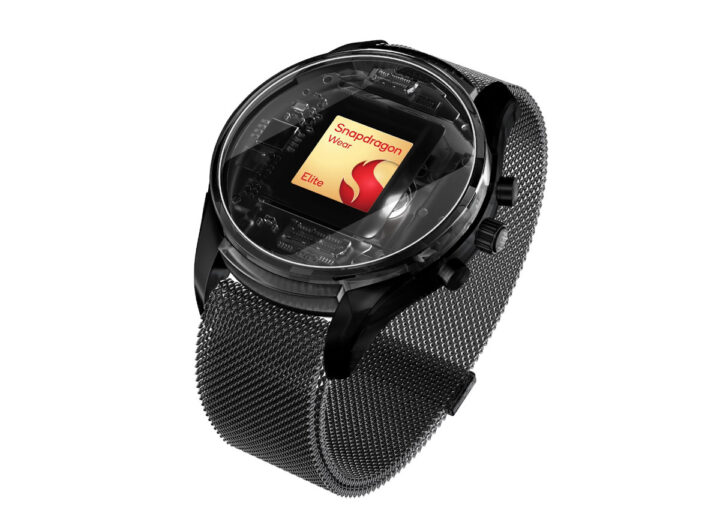
Snapdragon Wear Elite

Qualcomm Snapdragon Wear Elite is described as the “world’s first Personal AI wearable platform”, and features an NPU for on-device AI delivering up to 12 TOPS of performance at low power, supporting 2B parameter models. It delivers up to 5x single-core CPU improvement and up to 7x faster GPU compared to the previous-generation Snapdragon W5+ Gen 2 Wearable Platform while offering up to 30% more battery life for multi-day battery life, thanks to a 3nm architecture. The new Snapdragon Wear Elite platform also supports fast charging with up to 50% charge in under 10 minutes. Snapdragon Wear Elite specifications: CPU – Up to 2.1 GHz GPU Qualcomm Adreno 3D GPU supporting OpenGL ES 3.2, Vulkan 1.2, and OpenCL 2.0 APIs 2.5D GPU co-processor clocked at up to 500 MHz ISP – Qualcomm Spectra AI accelerator – Qualcomm Hexagon NPU; up to 12 TOPS of AI performance; support for up tp 2B […]

The post Qualcomm Snapdragon Wear Elite wearable platform offers 5G RedCap, WiFi 6, Bluetooth 6.0, built-in AI accelerator appeared first on CNX Software – Embedded Systems News.
NASA Postpones Artemis III Lunar Landing: Important Modifications Clarified

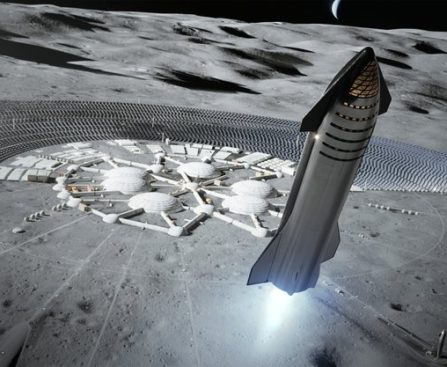
first crewed journey to the moon’s surface in over fifty years. Prior to this, two earlier Artemis missions were intended to be executed to facilitate and strategize for the forthcoming lunar landing. Artemis I was a success. Artemis II marked the first crewed flight around the moon since Apollo 17. However, it also faced delays and is now projected to launch as early as April, which would inevitably push back the final Artemis III mission as well. Consequently, NASA has now declared that Artemis III is cancelled, primarily due to those hurdles and delays in earlier missions, indicating that the U.S. return to the moon will be pushed to a later date, following gradual and “evolutionary” steps.

The administrator of NASA, Jared Isaacman, announced the news during a press briefing at Kennedy Space Center on Friday, February 27. According to NPR, Isaacman stated that the current plan “is simply not the correct route forward.” Artemis II will continue as planned, likely in April. NASA aims to take incremental measures to enhance the mission’s success, reportedly developing additional risk-free modifications to reduce the delays and issues encountered thus far. Essentially, Artemis III is still recognized as a mission and will occur; however, when it does take place, that future mission will be in low-Earth orbit, meaning no one will be landing on the moon. Currently, it is set for mid-2027. Ultimately, an Artemis IV mission is expected to enable a landing crew to set foot on the lunar surface, sometime in 2028 — if everything proceeds as planned.

We are still heading to the moon, just not on the upcoming Artemis mission

<div class="slide-key image-holder gallery-image-holder credit-image-wrap " data-post-url="https://www.bgr.com/2114363/nasa-artemis-3-moon-landing-cancel

Essential Raspberry Pi Advice for Novices

innovative methods to utilize it. You can leverage it to create intelligent home systems, use it as an educational instrument, or simply play around with various operating systems for enjoyment. The adaptability is a significant attraction of the Raspberry Pi. Yet, while numerous guides and official resources provide insights on maximizing its potential, there are a few minor hurdles for newcomers.

Once you unpack the Raspberry Pi, your path can lead in any direction—from establishing a personal cloud server to designing a bespoke retro-gaming console. Nevertheless, before you ascend to these achievements, it’s crucial to familiarize yourself with the genius behind the operations. The learning process includes mastering Linux terminals, sourcing the appropriate peripherals, and diving into projects that are genuinely entertaining and practical.

Here are several useful tips and techniques that connect the initial setup of the Pi with launching your first project. These suggestions will assist novices in learning to grasp the basics and guarantee your Pi acts as a reliable base for any imaginative project you envision.

Set up Pi OS before installation

Tecno’s Modular Phone Concept Rekindles Fond Memories of Android’s History While Showcasing the Difficulties of Modular Designs

Modular Phones Never Really Took Off, but Tecno Aims to Remind Us Why They’re Impressive

MWC 2026 is currently buzzing with activity, and Tecno is displaying its latest phones and devices. Nonetheless, the standout device at Tecno’s exhibit is reminiscent of a nostalgic era.

The Tecno Modular Phone evokes memories of a period when modular phones were quite trendy. Brands like Motorola and LG attempted it, but it never gained traction. Google also experimented with the notion of a modular phone, yet it never materialized.

Now, Tecno is demonstrating what’s achievable in a landscape saturated with MagSafe, without depending on it to function.

The Tecno Modular Phone design is remarkably slim; so slim, in fact, that it would make the iPhone Air and Galaxy S25 Edge feel inadequate. It measures 4.9mm thick and has eight distinct “zones” where accessories attach magnetically to the back of the device. Tecno presented an entire collection of accessories that can be attached to the phone for various uses.

For instance, a telephoto extender enhances the phone’s zoom capabilities beyond the built-in sensor, offering a zoom range from 3.5x to 10x. And if you wish to push it even further, you can utilize the Tecno Telephoto Lens, a camera-like handle that provides 10-20x zoom, featuring a sensor that includes optical image stabilization.

Curiously, you must connect wirelessly to the Telephoto Lens since it employs the phone’s screen as a viewfinder. In my experience, the viewfinder appeared to be somewhat sluggish, but this might have been due to external factors (my Bluetooth earbuds were misbehaving).

As per Tecno, the device utilizes a blend of Wi-Fi, Bluetooth, and mmWave to link up with the modules, which should guarantee a low-latency/high-bandwidth connection. Nevertheless, it’s vital to remember that this is still a concept, yet it was fascinating to observe the camera software adapt to the newly integrated hardware.

Other modules encompassed a microphone, a speaker, an item that resembled a selfie mirror and light, and even a stylish antenna attachment claimed to enhance your phone’s connectivity, even when signals are weak (which sounds almost too good to be true).

My favorite was likely the power bank, a 3,000mAh battery pack that is only 4.5mm thick. The highlight is that Tecno’s Modular Magnetic Interconnection Technology enables multiple modules to be linked, allowing for several slim battery packs for additional battery life or transforming the phone into a premium media device.

Tecno also introduced the devices and modules in two unique styles and colors, making it seem as if they were two entirely different phones.

What surprised me was the fact that this concept device actually worked. The screen lit up, I could navigate through apps, test the camera modules, and more. I’m uncertain about the chipset powering the Modular Phone Concept, but considering the “concept” label, it’s irrelevant since the likelihood of this reaching the market seems slim.

It appears impractical to expect users to carry an array of modules. For instance, the telephoto lens module is fairly heavy and almost toppled off onto a hard surface when I attempted to hand the phone to someone.

Modular phones have also struggled historically, with Google terminating Project Ara, LG abandoning its “friends” initiative with the modular G5, and Motorola’s commendable Moto Mods soon fading into obscurity as the company did. The investment seems to overshadow the practicality, with companies needing to consistently support the modular accessories and consumers facing justification challenges in spending on a new smartphone and its add-ons.

In the end, modular phones simply don’t align with consumer desires, regardless of their impressive design.

Nonetheless, it’s encouraging to see Tecno pursuing “new” innovations, even if the modular phone idea feels a bit “been there, done that.” I only wish some of Tecno’s other ideas, like the remarkable Phantom Ultimate G trifold phone, would come to fruition.

Meta Ray-Ban Smart Glasses Broadcast Delicate Videos for Human Data Labeling

A recent publication has highlighted serious worries about the privacy effects of Meta’s Ray-Ban smart glasses. Whistleblowers reveal that video streams captured by these glasses are transmitted to human data annotators in Kenya for evaluation, with this footage potentially including sensitive content that users may anticipate would be left out of analysis.

Meta Ray-Ban smart glasses provide two main methods for recording video. Users can manually capture point-of-view videos, which is especially beneficial for hands-free scenarios, or they can employ an AI feature that permits them to inquire about their environment. The latter necessitates that video footage be sent to Meta’s servers for processing.

The report from the Swedish outlet SVD notes that human annotators are assigned to review this footage, which occasionally features extremely private moments, including personal interactions and intimate acts. Employees from the contractor in Kenya expressed discomfort due to the nature of the content they come across, which can involve videos of people in delicate circumstances.

The details regarding the capture of such sensitive footage are ambiguous. While some cases may include intentional recording, worries persist that video is transmitted for review even when users are not in active recording mode. This prompts inquiries about the transparency of the AI functionality and how long video is relayed to Meta’s servers following a query.

Meta’s terms of service offer little clarification on this subject, stating that interactions with AI might be reviewed, yet it lacks specific criteria on which content is subject to human evaluation. Upon seeking additional information, Meta redirected questions back to their privacy policy, which has not eased apprehensions.

An examination of network traffic from the application revealed consistent communication with Meta servers, but the report did not deliver definitive insights into the data’s nature being transmitted. Former staff have mentioned that sensitive information ought not to be forwarded for human scrutiny, but depending on algorithms to identify such content is not reliable.

In conclusion, the disclosures regarding Meta Ray-Ban smart glasses highlight the necessity for caution when utilizing AI services, mainly concerning sensitive information. Users might appreciate the ease of hands-free recording, yet the possibility of privacy infringements prompts significant queries concerning the use of such technology.

Effective Techniques to Halt Doomscrolling Immediately

### The Influence of Doomscrolling on Mental Well-Being

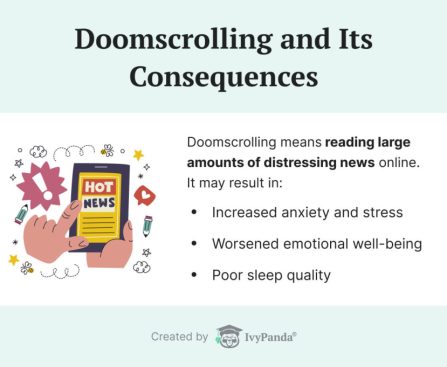
Doomscrolling, the habit of obsessively consuming negative news and upsetting content, has been associated with several negative consequences on mental well-being. This behavior can be especially tough to resist in times of global emergencies, yet it is vital to consider its effects on our mental state.

A recent meta-analysis titled *The Effect of Doomscrolling on Mental Well-Being* consolidates insights from 17 empirical investigations, indicating strong correlations between doomscrolling and mental health challenges such as anxiety, depression, stress, and a decrease in resilience. The analysis underscores that excessive intake of negative information can induce various forms of psychological distress.

Media psychology expert Reza Shabahang highlights the traumatic risks associated with doomscrolling, pointing out that trauma can stem not only from direct personal encounters but also from ongoing exposure to unsettling news. This persistent interaction with negative content may provoke acute stress reactions and symptoms similar to post-traumatic stress disorder (PTSD), resulting in a nervous system that finds it difficult to achieve tranquility.

The inclination to doomscroll is often intensified by uncertainty in times of crisis, as individuals may feel driven to seek additional information. Nevertheless, this behavior generally results in heightened stress instead of clarity.

To tackle doomscrolling, individuals can implement various strategies:

1. **Designate News Consumption Times**: Allocate specific periods for news consumption and restrict both the frequency and length of these intervals.

2. **Turn Off Notifications**: Deactivate alerts and badges from news apps to lessen the urge to check for updates frequently.

3. **Limit Usage of Infinite Scroll Applications**: Minimize or eliminate the use of apps that utilize infinite scrolling, which can promote extended engagement with negative information.

Adopting these strategies can help alleviate the repercussions of doomscrolling and foster improved mental well-being. Personal initiatives, such as a news and notification cleanse, can also act as effective techniques to regain authority over news intake.

In conclusion, while the desire to remain informed during crises is understandable, it is crucial to acknowledge the potential mental health dangers linked with doomscrolling and take constructive measures to regulate this behavior.

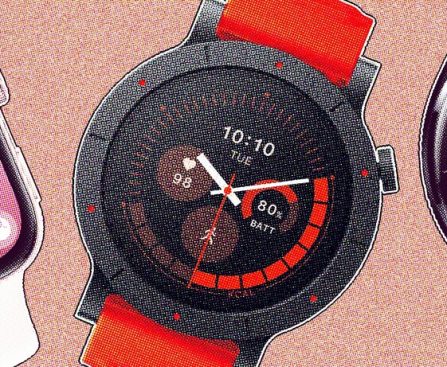
Consumer Reports: 4 Smartwatches to Steer Clear Of

Windows 11, anyone? You could undoubtedly choose nearly any device available and distinguish the good from the bad, but it becomes most logical when discussing a more functional device, like a smartwatch.

Typically crafted to aid in monitoring your health and fitness, receive alerts on your wrist while you’re away from your phone, and yes, naturally, tell the time, a smartwatch is somewhat like a highly condensed smartphone. However, not all smartwatches are made equal. There exist budget-friendly or inexpensive smartwatches that exceed their price points. Conversely, there are some quite pricey selections on the other end of the scale. Additionally, there are a few balanced choices between those extremes. Can you genuinely discern the difference between affordable and premium smartwatches? Likely. 

But an excellent resource to check the ratings or estimated effectiveness of a device, irrespective of its price, is on Consumer Reports, and, as you might assume, they’ve compiled a list of some of the top smartwatches and fitness trackers. Instead of starting at the top of that list, however, let’s traverse in reverse and begin from the bottom — these are the smartwatches you may want to steer clear of, according to CR.

1. 3Plus Vibe Plus (Gen 2)

Offered at Walmart and Amazon for under $40, it shouldn’t be surprising that the 3Plus Vibe Plus (Gen 2)

The Frightening Effects of the Prohibited X-Files Episode

cult classic horror, “Wrong Turn,” Mulder (David Duchovny) and Scully (Gillian Anderson) were summoned to look into an inbred family in Home, Pennsylvania, that resembled the not-so-distant relatives of those cannibalistic mountain inhabitants. ‘Home’ was essentially the unofficial precursor to “Wrong Turn,” despite the fact that the narratives each conveyed were inspired by and grounded in entirely distinct events and individuals.

‘Home’ traces the journey of the two FBI agents as they are dispatched to Pennsylvania to uncover the mystery behind the murder of a physically disabled infant who was interred alive in a field. Upon their arrival, local sheriff, Andy Taylor (Tucker Smallwood), updates Mulder and Scully that the nearest household to the crime scene indeed belongs to an unusual family (the Peacocks), who constructed their home during the Civil War and are likely to reproduce through incest. Nevertheless, as far as the authorities are aware, only three males reside there now, the malformed sons of Mr. and Mrs. Peacock, who presumably perished in a vehicular accident. After Scully performs an autopsy on the baby — uncovering severe congenital anomalies of various sorts — Mulder is convinced that the brothers were involved in the murder. What he remains unaware of is that their investigation will usher in more deaths, and unveil a chilling secret steeped in the sort of grotesque that the finest and most haunting tales of horror are comprised of.

Home is The X-Files at its intensely disturbing best

<div class="slide-key image-holder gallery-image-holder credit-image-wrap " data-post-url="https://www.bgr.com/2111053/banned-x-files-episode